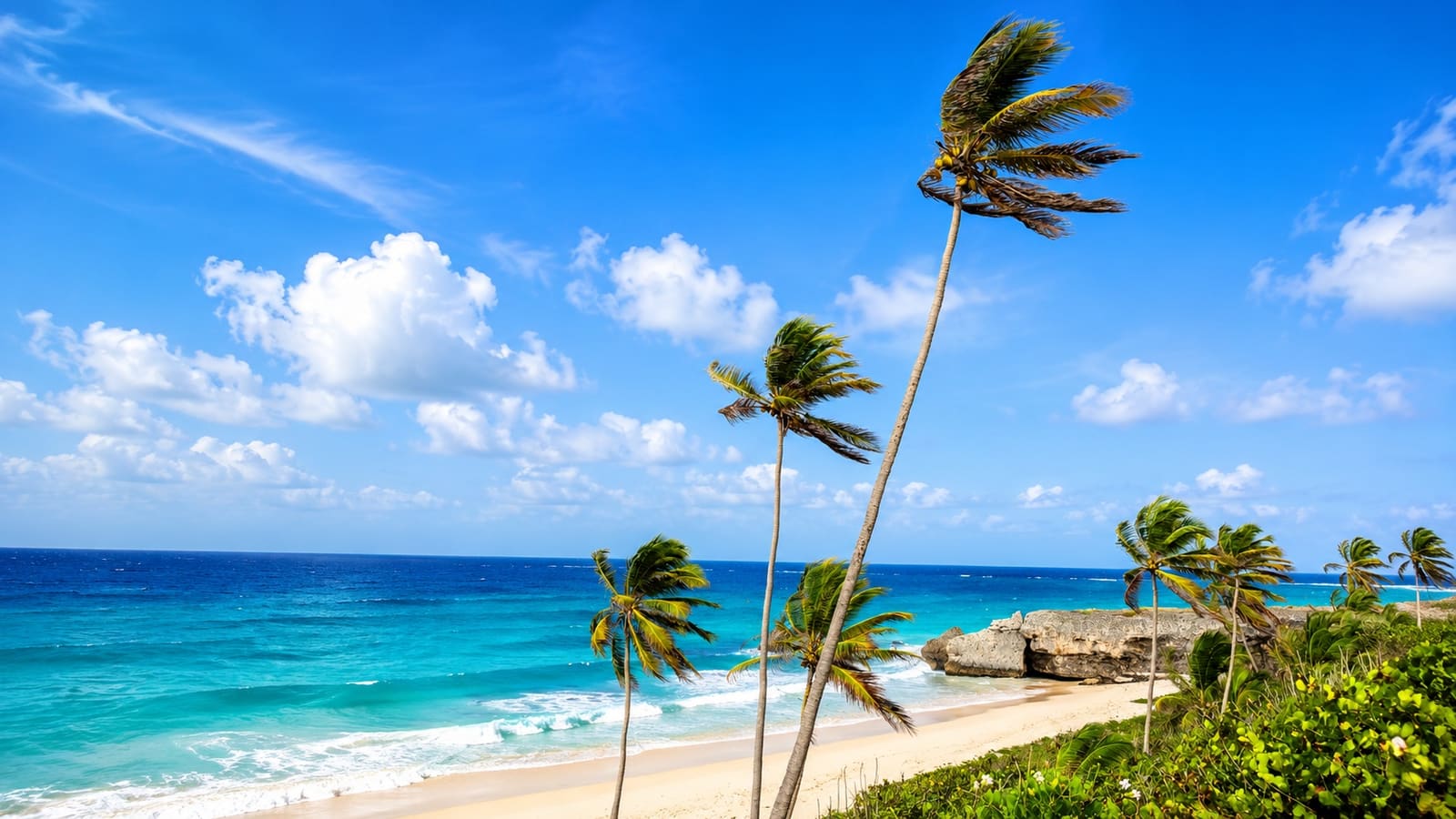
Two coasts, two entirely different oceans. Where to swim, where to just look, and the one rule that surprises most first-time visitors.
Here is the thing nobody tells you before you arrive: Barbados has two oceans. The west coast faces the Caribbean Sea — flat, clear, warm as a bath. The east coast faces the open Atlantic, with nothing between it and Africa. Same island, twenty-five minutes apart, and one of them will drag you out to sea.
Get that distinction right and you'll have a very good week.
First, the rule that surprises everyone
There are no private beaches in Barbados. None. Beachfront owners hold title only up to the high-water mark, which means the sand in front of the grandest hotel on the island is as much yours as anyone's. Sandy Lane, The Crane, all of it — walk on.
What you don't automatically get is the right to cross someone's lawn to reach it. That's what the designated access points are for: the National Conservation Commission maintains around eighty-five of them island-wide, some pedestrian paths, some with car parks. Find the access, use the beach, ignore anyone who suggests otherwise.
How to read a Barbados beach before you get in
Lifeguard towers are painted bright yellow and you want to swim near one. The flag system is refreshingly blunt: yellow means conditions are risky, red means stay out. Not "be careful" — out.
Roughly seventeen beaches carry lifeguards, which sounds like a lot until you remember the island has about sixty miles of coast. Most of it is unwatched. If you're somewhere quiet and beautiful with nobody around, that's information, not an invitation.
One more thing to learn by sight: the manchineel tree. It fringes a lot of Caribbean beaches, and every part of it is hostile — the milky sap blisters skin, the small green apple-like fruit is dangerous to eat, and standing under one in a rain shower is enough to burn you. Around the region they're often marked with a red painted band or a warning sign, but don't rely on that. Learn the tree, and don't shelter under beachfront trees when it rains.
West coast — the calm side
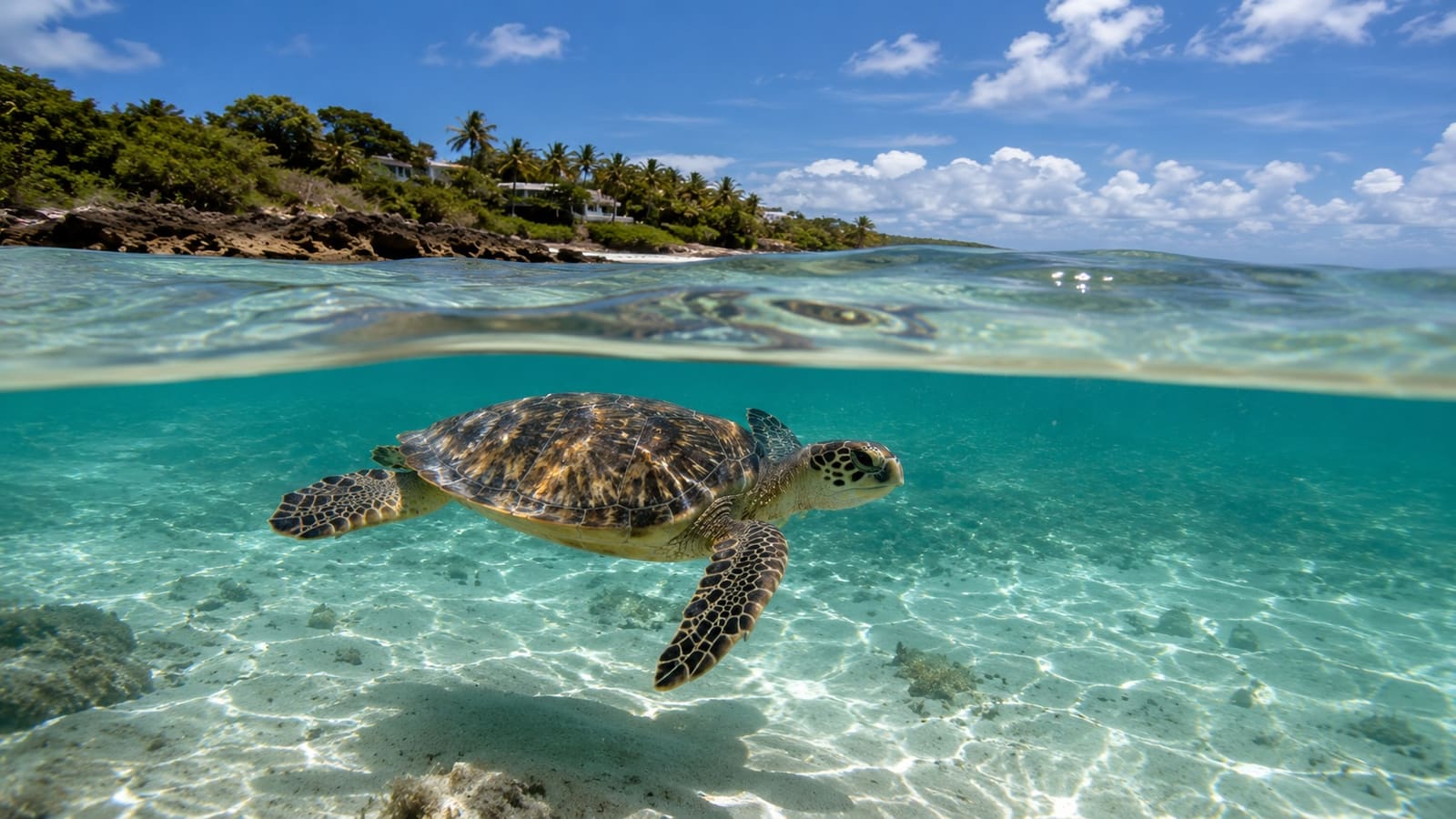
Paynes Bay, St James. If you only swim at one beach, make it this one. The water is glassy, especially before eight in the morning, and hawksbill and green turtles gather about a hundred yards out. Catamarans stop here for exactly that reason, but you can swim to them yourself.
Mullins, St Peter. The most sociable west-coast beach — roped-off swimming squares, loungers under the casuarinas, a proper beach-bar scene. There's a free government car park directly opposite, which fills by mid-morning in high season. Toilets, showers and changing rooms on site.
Batts Rock, St Michael. Where Bajans go. Calm water, decent snorkelling, and a shaded strip of picnic tables under the trees between here and Paradise Beach. Small playground, showers, free car park that fills early. It is not a resort beach and that is the point.
Folkestone, Holetown. A marine protected area with a marked snorkel trail starting about ten metres from shore. Motorised boats are restricted, so it stays calm and clear. There's a boardwalk running down to Holetown, plus a playground and floodlit courts.
South coast — livelier, breezier
Carlisle Bay and Browne's Beach, St Michael. The best value in Barbados. A crescent of white sand right beside Bridgetown, with a roped safe-swimming zone, lifeguards, showers and chair hire — and six shipwrecks and a turtle population just offshore. You can pay for a boat. You can also just swim out. Both work.
Accra (Rockley), Christ Church. The full-service family beach: playground, picnic tables, food stalls, taxi rank, wheelchair access, ample parking and a lifeguard hut with flags. Enough swell for boogie-boarding in winter and spring without being intimidating.
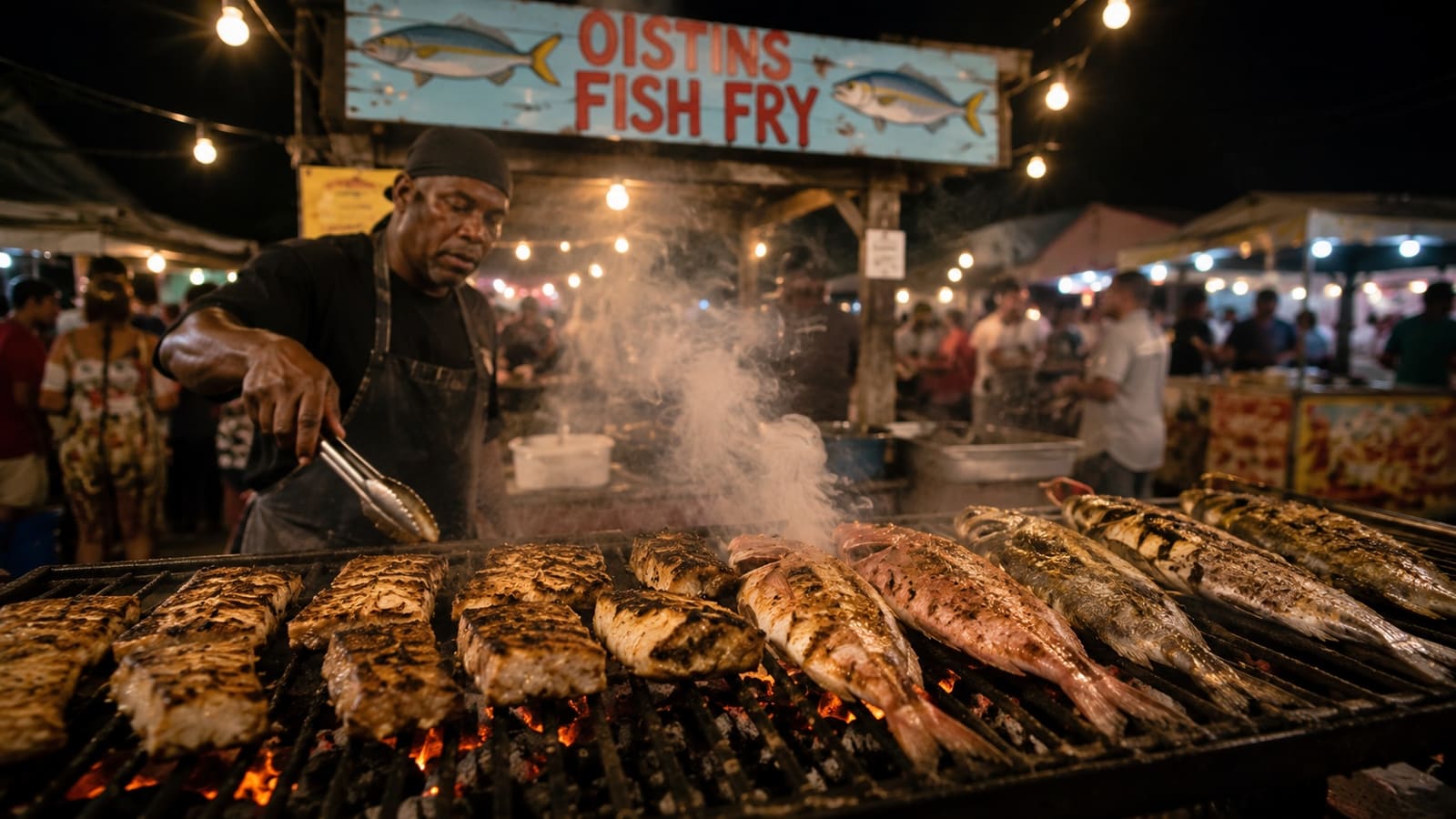
Miami Beach (Enterprise), Christ Church. Two beaches pretending to be one. The western end is shallow and calm — genuinely good for small children. The eastern end catches swell and will knock you over. Non-motorised watersports only, so no jet-ski whine, and there's a food truck under the trees with a local reputation for fishcakes.
Crane Beach, St Philip. The one people photograph. It faces the Atlantic from the south-east, the sand carries a faint pink tint from crushed coral, and the shorebreak is real. Only the sheltered cove is gentle; beyond it there's proper current. Confident swimmers, or stay in the cove. You reach it via the cliff lift or the steps at The Crane, which has been a hotel since 1867.
East coast — beautiful, mostly not for swimming
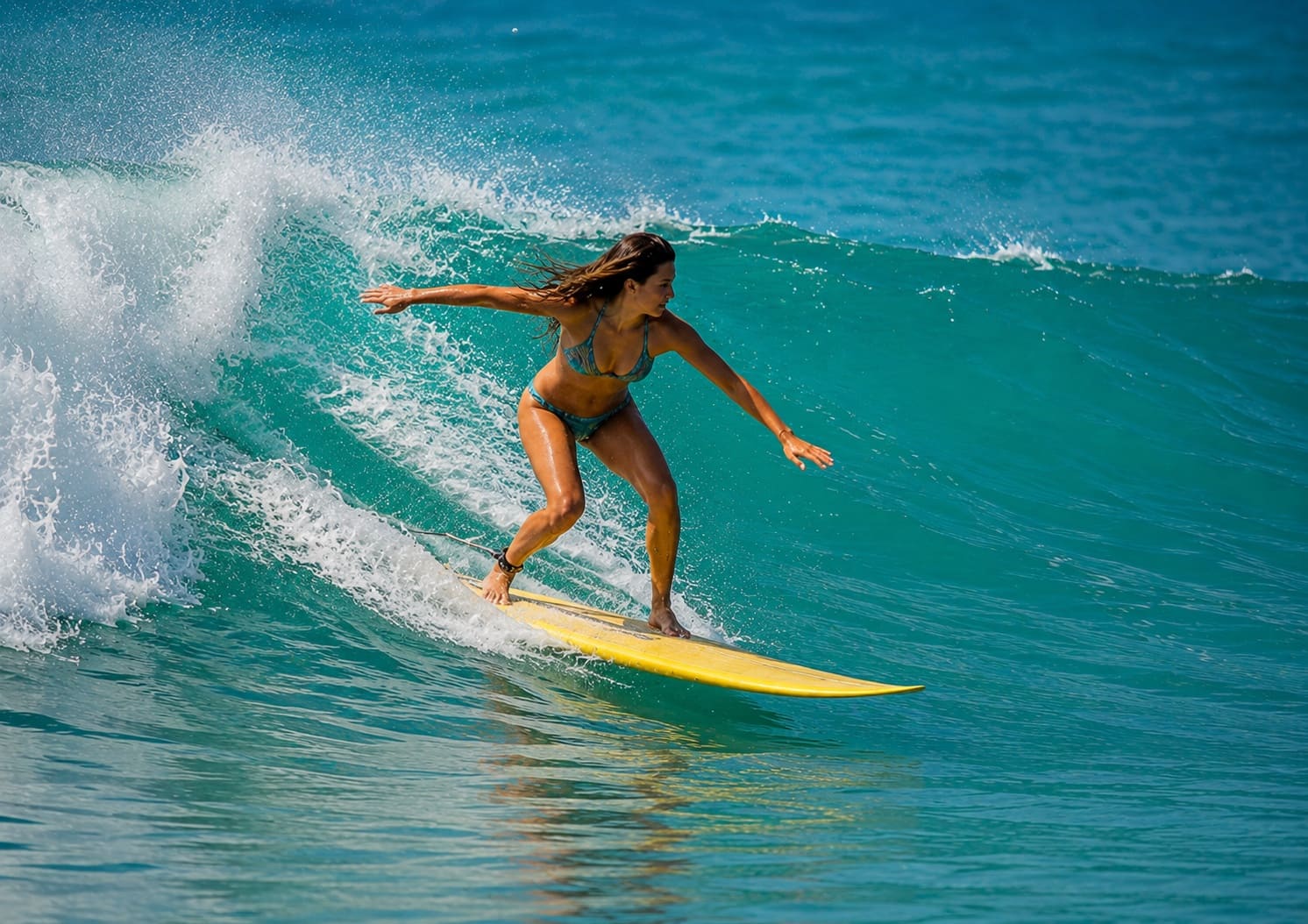
Bathsheba and the Soup Bowl, St Joseph. Do not swim here. The undertow is serious and the beach is not the attraction — the attraction is standing on the sand watching some of the best surfers in the Caribbean work a reef break, with those enormous coral boulders standing in the surf. Those boulders are fragments of an ancient reef, pushed up as the island rose. What you can do is sit in the shallow rock pools carved into the inshore reef while the surf spills over the edge into them. It's the best seat on the coast.
Bath, St John. The east coast's exception, and the reason it's on this list. A substantial offshore reef takes the Atlantic's energy before it reaches shore, so you get calm, safe swimming while watching breakers detonate on the reef a few hundred yards out. There's a lifeguard, a red flag when it's not safe, a big car park, changing rooms, a playground and plenty of shade. Bajan families take over on public holidays, which tells you everything.
Honourable mention: Cattlewash, St Joseph. More than a mile of empty Atlantic beach with the constant east wind and the casuarinas at Barclays Park. Currents and rock shelves make open-water swimming unsafe, but at low tide the reef is exposed and the coral pools are calm enough to sit in. It's a walking beach, and one of the loveliest on the island.
A short word on sargassum
The seaweed that makes headlines lands mostly on the east and south-east coasts, and mostly in late summer. The reef-sheltered west coast is far less affected. If you're visiting in a heavy year, plan your swimming west and your sightseeing east.
The practical version
- Snorkelling: Carlisle Bay, Folkestone, Paynes Bay, Batts Rock
- Small children: Miami Beach (west end), Bath, Batts Rock, Accra
- Sunset: anywhere on the west coast — the east faces sunrise
- Quiet: Batts Rock early, the northern end of Cattlewash
- Just looking: Bathsheba, Crane, Cattlewash
Sunscreen, cash for the beach bar, and check the flag before you get in.
Planning a trip around this?
Search flights, a car and a place to stay in one go — or let AI build the whole itinerary free.
Plan my trip — free